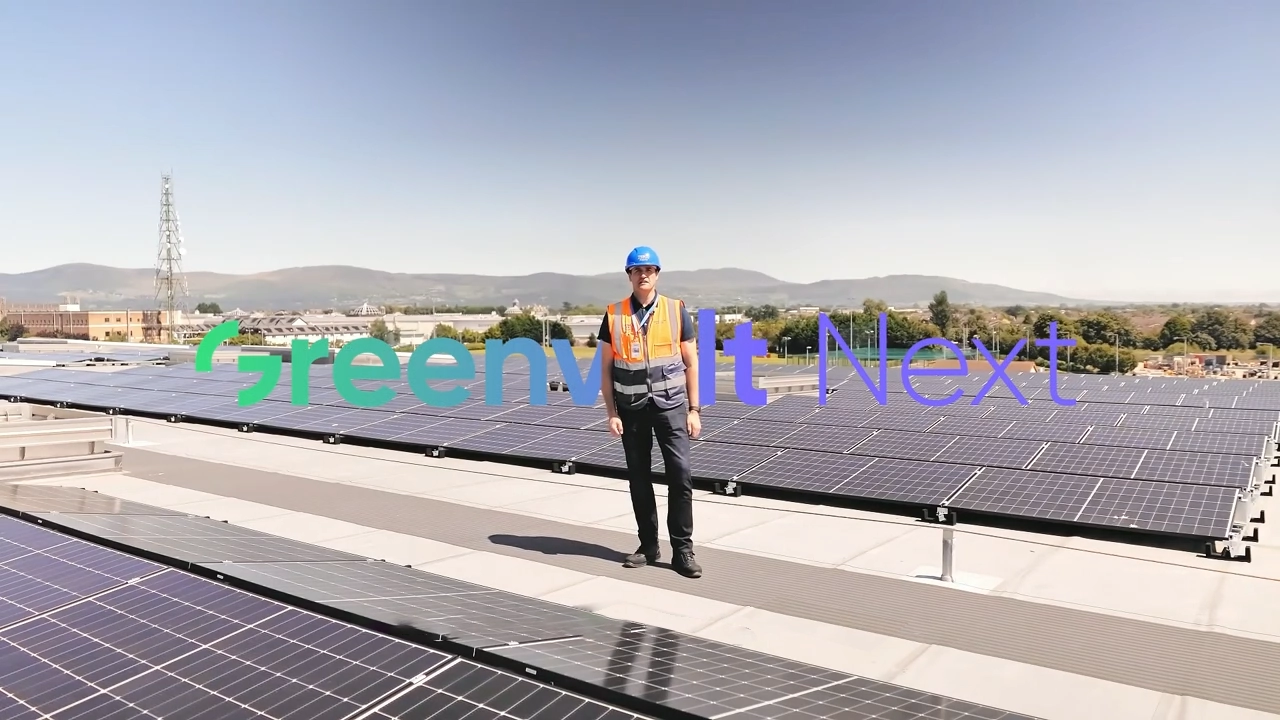
Tesco Ireland
Building the Renewable Energy mix of one of the country’s largest grocery retailers
THE COMPANY
Tesco Ireland is one of the country’s largest grocery retailers
Tesco Ireland is one of the country’s largest grocery retailers, operating a nationwide estate of stores and distribution infrastructure with high, consistent electricity and heat demand (refrigeration, lighting, HVAC, and daily retail operations). To support its commitment to becoming carbon neutral in its own operations by 2035, Tesco has been expanding on-site renewable generation across its estate and reducing dependence on grid electricity.

THE PARTNERSHIP
Increase on-site renewable generation across Tesco’s larger-format stores
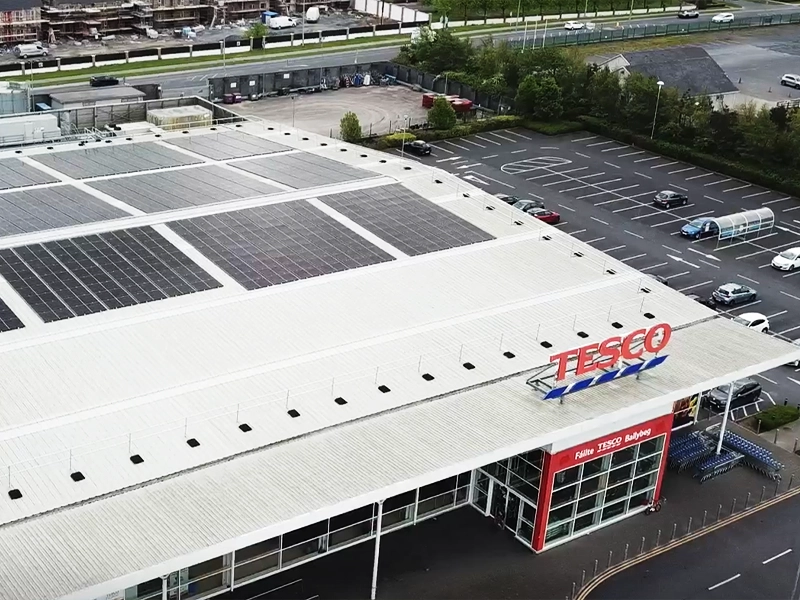
Since 2018, Tesco and Greenvolt Next have built a growing renewable energy partnership in Ireland. It began with the installation of biomass boilers in Tesco stores, helping to reduce reliance on conventional heating systems and lower carbon emissions. The partnership then expanded into wind energy, including a wind turbine project in Donabate, and later moved into solar power through the installation of rooftop solar panels. Together, these projects show how Tesco and Greenvolt Next have worked over time to increase the use of cleaner energy solutions across Tesco’s operations.
Key numbers that
speak for themselves

12
stores

5
MW
Installed Capacity (across 12 stores)

Up to 20
%
of electricity needs

4,560
panels
+2,000
panels
Earlier flagship installs

long term
26 year
PPA referenced for the latest phase

1
turbine, 500 kW

500
kW
wood chip biomass boiler
THE CHALLENGE
A need for scalable, repeatable renewable solutions across a large retail estate
Tesco needed scalable, repeatable renewable solutions across a large retail estate to:

Progress toward carbon neutrality in operations by 2035 with measurable on-site generation.
Reduce exposure to energy-price volatility by lowering grid import and increasing self-generation at store level.
Deliver solutions that work operationally on live retail sites (fast deployment, minimal disruption, consistent performance).
Expand beyond electricity-only decarbonisation by addressing thermal demand where appropriate (e.g., biomass) and adding diversified renewables (e.g., wind).
Rooftop solar on large-format stores was a strong fit because it leverages existing roof space at scale, while the broader “portfolio approach” (solar + wind + biomass) enables Tesco to tackle both electrical and thermal emissions drivers across different store types.
SOLUTIONS
A tailored solution to meet Tesco’s needs
Technical Solutions
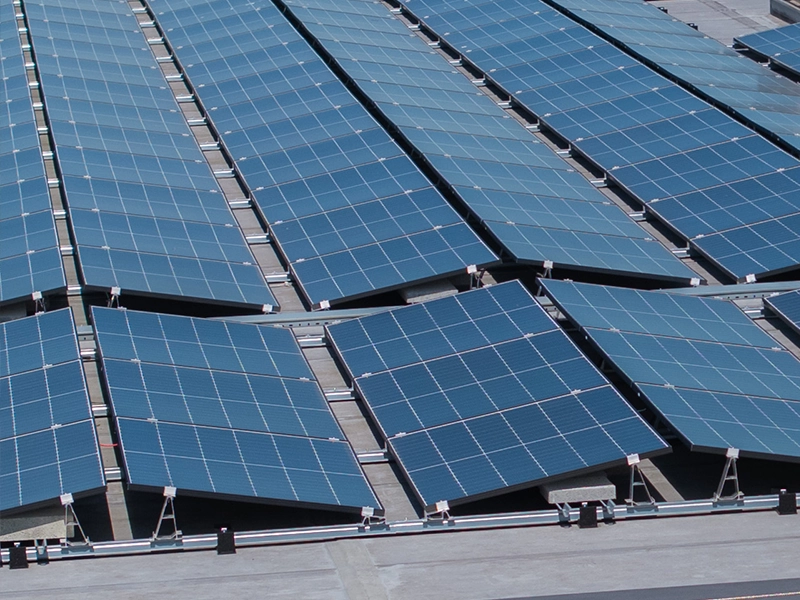
Multi-site rooftop solar PV rollout across Tesco’s larger stores, designed to meet up to ~20% of store electricity demand.
Delivery across specific Tesco Extra and Superstore locations (examples referenced include Dundalk, Clearwater, Arklow, Carrick-on-Shannon, Ballybeg; plus earlier installations at Liffey Valley and Naas).
Complementary renewables at selected sites, including wind (Donabate) and biomass (e.g., Galway).
Financial Solution
The latest solar phase is described as backed by a long-term 26-year Power Purchase Agreement (PPA) model, supporting predictable costs and long-term delivery.
PPA
Under a long-term PPA, Tesco purchases the electricity produced by the on-site solar assets at agreed terms over the contract duration, supporting cost predictability while enabling rapid rollout and measurable emissions reductions without relying solely on internal capex for each site.
THE RESULTS
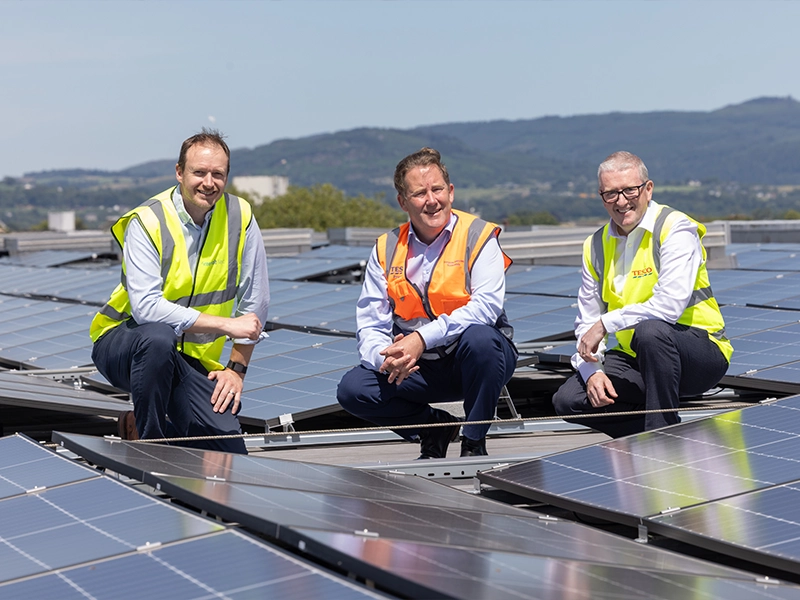
Tesco’s partnership-led rollout delivers measurable, estate-wide impact.
Across the latest phase, the programme adds ~5 MW of new on-site solar across 12 stores, designed to meet up to ~20% of a store’s electricity needs, reducing reliance on grid electricity and helping manage energy costs.
It also builds on an expanding national footprint of solar generation at Tesco sites (reported as 24 locations with a combined ~7 MW by end of 2025, with 5 MW attributed to the Greenvolt Next partnership), strengthening Tesco’s pathway to carbon neutrality by 2035.
Beyond solar, Tesco has implemented additional decarbonisation measures with Greenvolt/Enerpower heritage solutions—including wind generation at Donabate and biomass boiler installations (e.g., Tesco Galway), supporting a more comprehensive approach across both electricity and heat.
LOOKING AHEAD
Performance monitoring & reporting: Track site-level generation (kWh), self-consumption share, and emissions impact to support carbon reporting and inform future rollout decisions. (PPA-backed rollout and store-level targets are explicitly referenced; monitoring is the natural operational next step.)
Potential scaling: Extend rooftop PV to additional stores and non-store assets (e.g., distribution), using a repeatable design-and-deliver model.
Complementary measures: Expand hybrid decarbonisation where relevant, pairing solar with energy efficiency, storage, and continued site-specific solutions for thermal demand (biomass) or diversification (wind).