
Aldi Ireland
Providing scalable on-site renewable energy, one store at a time
THE COMPANY
ALDI Ireland is a leading grocery retailer
ALDI Ireland is a leading grocery retailer with a nationwide store network and high, consistent electricity demand driven by refrigeration, lighting, and daily operations. As part of its ongoing commitment to greener and more energy-efficient solutions, ALDI is investing in on-site renewable generation to reduce reliance on grid electricity, improve cost stability, and support long-term sustainable growth.
THE PROJECT
Rooftop Solar Photovoltaic Systems across 44 ALDI stores
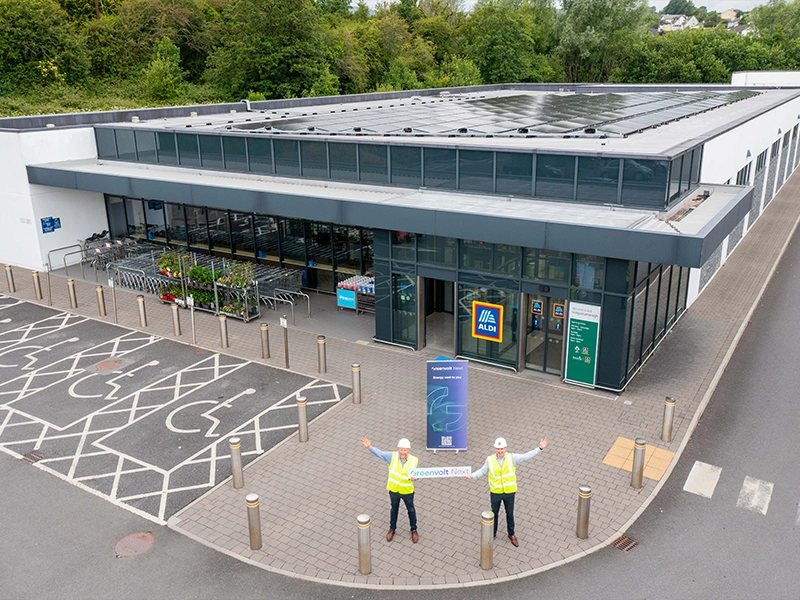
Greenvolt Next has partnered with ALDI to roll out rooftop solar photovoltaic (PV) systems across 44 ALDI stores in Ireland over a two-year programme. The rollout begins with installations at 22 stores in 2025, followed by 22 more stores in 2026.
Once delivered, the programme will provide a total installed capacity of 6.3 MW. Each store system is expected to generate an average of 95,500 kWh annually, supplying approximately 30% of each store’s electricity consumption and significantly reducing reliance on grid power.
Key numbers that
speak for themselves

+
44
stores in scope

6.3
MW
Installed Capacity

4.2
GWh
Estimated total annual generation

12,672
tons
panels (288 per store)

EPC
Financing Type
THE CHALLENGE
A scalable on-site renewables programme
ALDI needed a scalable on-site renewables programme that could:

Accelerate decarbonisation by reducing grid electricity consumption across a large store portfolio
Improve energy resilience and reduce dependency on the national grid.
Manage external price pressures through lower electricity consumption and improved cost control.
Deliver at pace, across multiple live retail sites, with a repeatable design and rollout approach.
Rooftop solar was selected because it leverages existing store assets (large roof areas) and can be replicated quickly across many locations, making it one of the most effective decentralised generation options for the retail sector.
SOLUTIONS
A tailored solution to meet Aldi’s needs
Technical Solutions
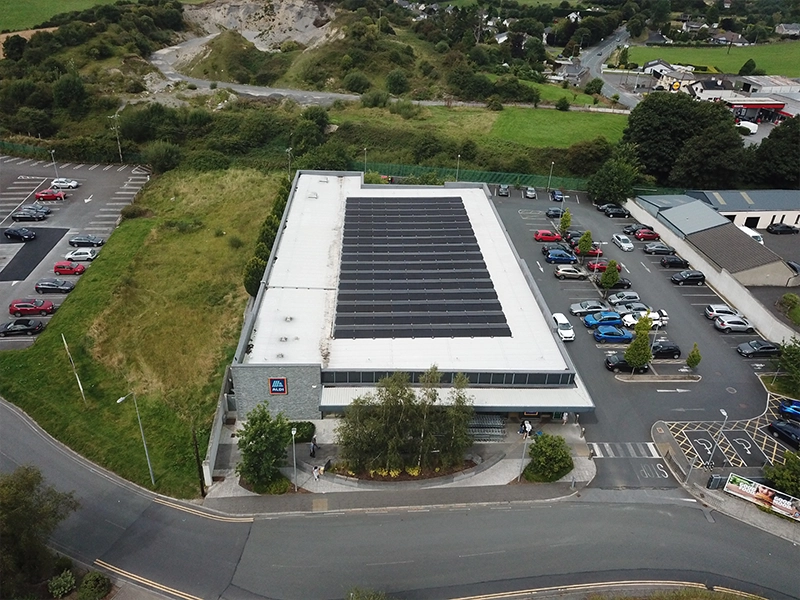
Rollout of rooftop solar PV systems across 44 stores.
Standardised system design at store level: 288 panels per store, sized to provide ~30% of annual electricity needs.
Financial Solution
A €5 million investment by ALDI to fund the programme, supporting long-term cost management through lower electricity consumption.
Delivery model (multi-site rollout)
Two-phase deployment: 22 stores in 2025, then 22 stores in 2026, enabling controlled execution and consistent performance outcomes across the estate.
THE RESULTS
Supporting both operational efficiency and decarbonisation goals
The rooftop PV rollout delivers measurable outcomes for ALDI, supporting both operational efficiency and decarbonisation goals.
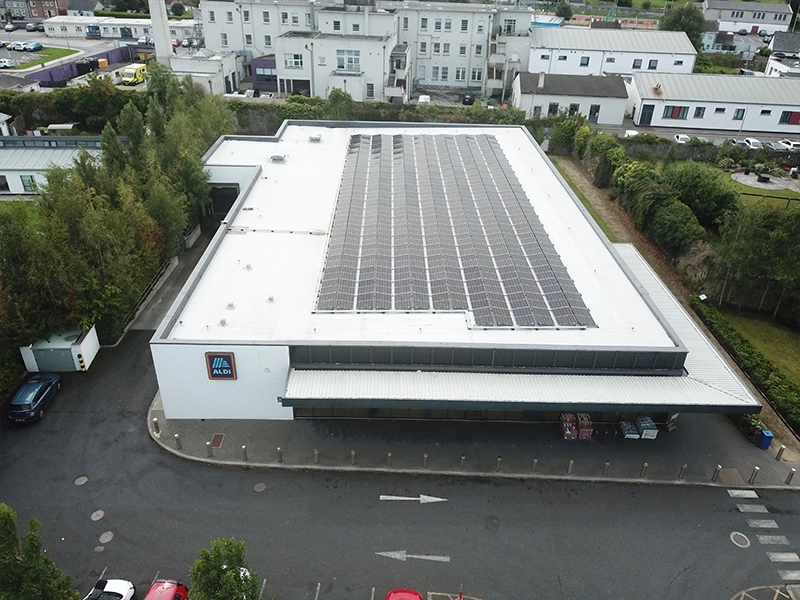
Across the 44-store portfolio, the systems are expected to deliver 6.3 MW of installed solar capacity, generating an average of 95,500 kWh per store per year (approximately 30% of a typical store’s electricity demand). This reduces reliance on grid electricity and strengthens energy resilience.
The programme also supports ALDI’s focus on long-term cost management by lowering electricity consumption and helping the business manage external energy price pressures, while continuing to invest in efficiencies that support its customer value proposition.
LOOKING AHEAD
Programme execution & learning: Complete the phased rollout (22 stores in 2025, 22 in 2026) and use performance learnings to optimise future deployments.
Performance monitoring & reporting: Track generation (kWh) and store-level solar contribution to evidence impact and inform future energy strategy. (The PR provides generation and % coverage targets; monitoring approach is implied as standard best practice.)
Potential scaling: Replicate the model across additional sites or integrate complementary measures (e.g., storage or efficiency upgrades) to increase self-consumption and resilience over time.


